Budka, P., Schweitzer, P., & Povoroznyuk, O. (Eds.). (2026). Ethnographies of infrastructure [Special issue]. Journal of Contemporary Ethnography, 55(1).
Cover of JCE, 55(1).
Summary
Philipp Budka, Peter Schweitzer, and Olga Povoroznyuk have published a special issue titled “Ethnographies of Infrastructure” in the Journal of Contemporary Ethnography (Vol. 55, No. 1). The issue showcases research on infrastructure as a social, political, and everyday phenomenon.
In the opening article, Schweitzer, Povoroznyuk, and Budka introduce an ethnographic framework that highlights how infrastructures are embedded in daily life, shaped by power relations, and oriented toward imagined futures. Together with Alexandra Meyer, Katrin Schmid, and Nikita Strelkovskii, they also co-authored an article examining how infrastructural futures are actively produced and negotiated in the present, with a strong focus on Arctic contexts.
Further contributions extend this engagement with infrastructure across different regions. Alexandra Meyer, with Ria-Maria Adams and Sophie Elixhauser, examines Arctic airports as critical yet ambivalent infrastructures of connection. Olga Povoroznyuk contributes a comparative analysis of expanding seaport projects in Alaska, Norway, and Russia, while Katrin Schmid analyzes how global e-commerce platforms are transforming food supply and everyday life in Nunavut, Canada. Broadening the geographical scope, Andrea Freddi, Lucaz González, and Felipe Cecchi explore conflicts over road construction and environmental conservation in the Chilean North Patagonian frontier, treating the environment itself as a form of infrastructure.
Situated at the junction of boreal forest, Subarctic tundra, and Hudson Bay, the town of Churchill in northern Manitoba is unique for its transport infrastructure. With no road access, this community of 870 people hosts the only deep-water port on the Arctic Ocean connected to the North American rail network. Its airport, a legacy of military presence, supports a growing tourism economy. Churchill exists because of these infrastructures—and has changed alongside them. This entanglement becomes especially visible when infrastructure is disrupted. In 2017, flooding destroyed sections of the Hudson Bay Railway, cutting off land access for eighteen months. The disruption triggered shifts in ownership, control, and governance, resulting in one of the few cases worldwide where Indigenous and northern communities collectively own and manage a major Subarctic transport corridor. Ethnographic fieldwork and future scenario workshops reveal how residents of Churchill engage with infrastructure—living with, adapting to, and reimagining it in everyday life. Infrastructure is approached not only as a technical system but as a site of political, affective, and future-oriented engagement. As such, it offers a powerful lens for understanding broader dynamics of change and continuity in (sub)Arctic regions shaped by climate pressures and colonial legacies.
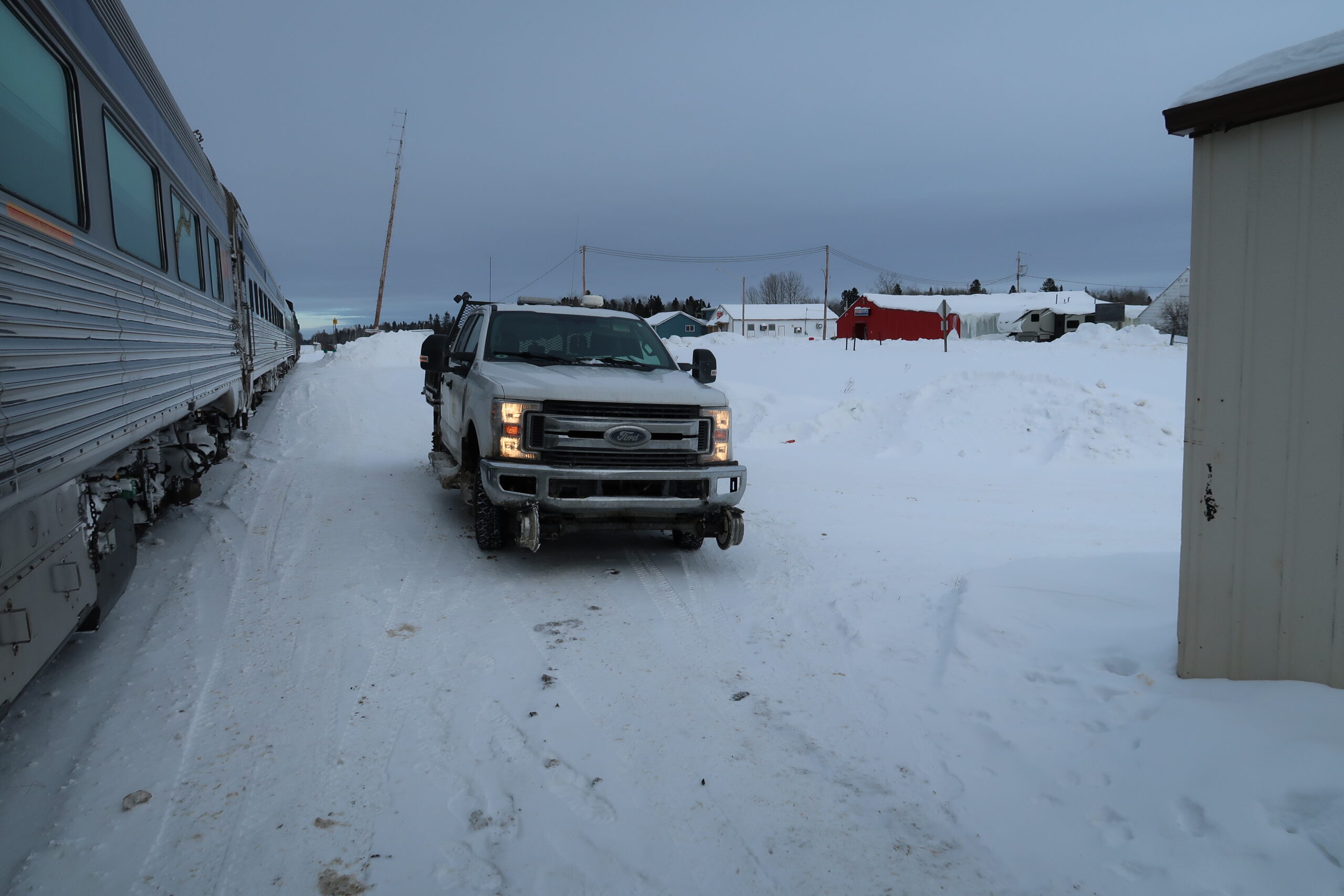
Road-rail pickup truck in Wabowden, MB, Canada. (Photo by Philipp Budka)
The openly accessible introduction to the Special Issue “Narratives and Temporalities of Infrastructure: The Canadian Experience,” which I co-authored with Giuseppe Amatulli for Anthropologica, outlines the conceptual framework and scope of the collection. We reflect on how infrastructures are narrated and temporalized, and how these perspectives contribute to anthropological research in the Canadian context.
Anthropological Approaches to Infrastructure
Infrastructures lie at the core of numerous social transformations, sociopolitical and economic developments, and creative processes of innovation. They have become significant indicators of an ongoing transition towards preferable futures, symbols of economic growth, technological advancement, and modernization. As Harvey and Knox (2012, 523) argue, infrastructures embody “promises of emancipatory modernity”—such as speed, connectivity, and economic prosperity; they “enchant” the hopes and dreams associated with development. Infrastructures contribute to imaginaries of improved futures, which remain elusive, flawed, and difficult to define (Abram and Weszkalnys 2013). Operating “on the level of fantasy and desire” (Larkin 2013, 333), infrastructures “draw together political and economic forces in complicated ways and often with unexpected effects,” implicating “broader dynamics of social change” (Harvey, Jensen, and Morita 2017, 2).
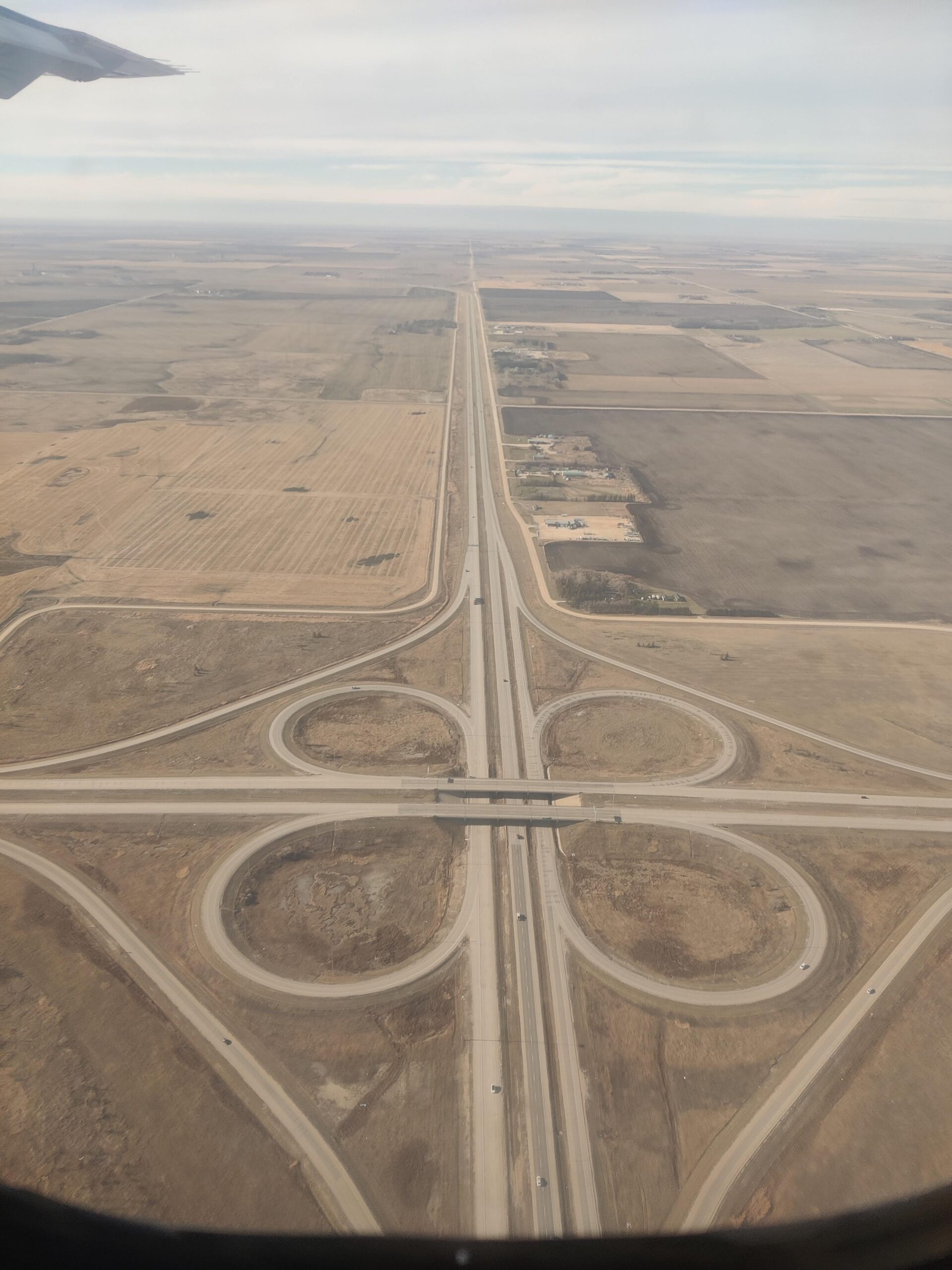
Cover of Anthropologica, 67(1). (Photo by Philipp Budka)
Summary
The special issue of Anthropologica, “Narratives and Temporalities of Infrastructure: The Canadian Experience,” examines infrastructure as a social, political, and temporal formation. Edited by Giuseppe Amatulli and Philipp Budka, the collection brings together ethnographic analyses of how infrastructures mediate governance, environmental change, and everyday life across northern and rural Canada.
Contributors explore infrastructure as a site of contestation, relationality, and future making. Carly Dokis, Randy Restoule, and Benjamin Kelly examine First Nations water systems and the political ontologies that shape risk and responsibility. Susanna Gartler and Susan A. Crate analyze Inuvialuit and Gwich’in understandings of thawing permafrost as a transforming infrastructural relation under climate change. Giuseppe Amatulli investigates development planning and extractive futures in British Columbia resource towns, while Anna Bettini considers renewable energy narratives in rural Alberta. Kaylia Little addresses experiences of energy reliability in Iqaluit, and Katrin Schmid examines runway expansion and projected futures in Nunavut. Philipp Budka traces infrastructural disruption and entanglement in northern Manitoba. The issue concludes with a commentary by Anna Soer on infrastructures of the future and their implications for governance.
The collection highlights infrastructure as a key analytic for understanding sovereignty, temporality, and the uneven production of futures in Canada.
Budka, P. (2024). Notes on the transformation of a railway in Northern Manitoba, Canada. Paper at Vienna Anthropology Days 2024, Vienna, Austria: University of Vienna, 23-25 September. Co-chairing of Panels “Building Tomorrow: Exploring Infrastructures and Futurities”, 25 September.
Introduction
On a chilly day in February 2022, I boarded the Via Rail Canada train in Winnipeg for my inaugural journey to Churchill, a community of 870 individuals situated at the Hudson Bay in Northern Manitoba, Canada, which is inaccessible by road. I was the only passenger in the sleeper car for this 48-hour journey. Four other passengers were siting up front in the economy car. A train attendant told me that the COVID-19 pandemic has significantly reduced the number of people using public transportation, particularly during the winter months when ice roads offer a cost-effective travel option in Manitoba. Leaving the province’s capital behind, we rode along the endless fields of grain of Canada’s prairie, now all covered in ice and snow. From time to time, the train stopped. One reason for that was to let freight trains pass. The railway companies always give priority to freight transportation. “That’s where the business is,” the train attendant explained during one of those stops.
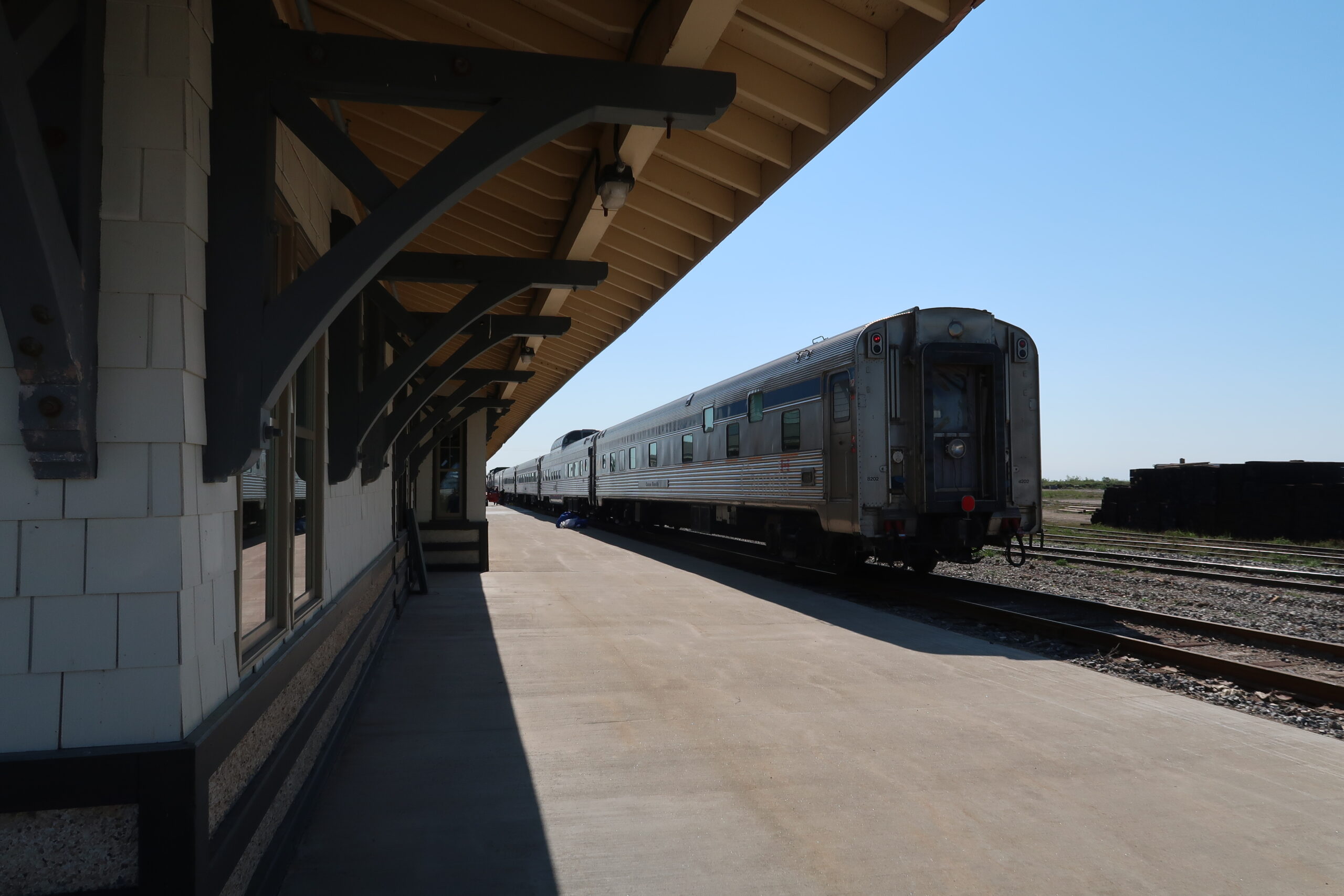
Train station in Churchill, MB, Canada. (Photo by Philipp Budka)
In a statement written by the Executive Committee of the European Association of Social Anthropologists on “Why anthropology matters” in 2015, comparison is defined as a “systematic search” for sociocultural similarities and differences, with the objective of developing “general insights into the nature of society and human existence” (EASA, 2015). Together with ethnography and contextualization, comparison constitutes a fundamental element of the “anthropological triangle,” as defined by Roger Sanjek (1998, p. 193). This term refers to the operational system utilized by anthropologists to acquire and use ethnographic data in the process of writing ethnographies.

Marina in Stockholm, Sweden. (Photo by Philipp Budka)
Budka, P. (2024). Transport infrastructure and community development in Churchill: Findings from future scenario workshops. Presentation at Churchill Barber Symposium 2024, Churchill, Canada: University of Manitoba et al., 28-29 August.
Abstract
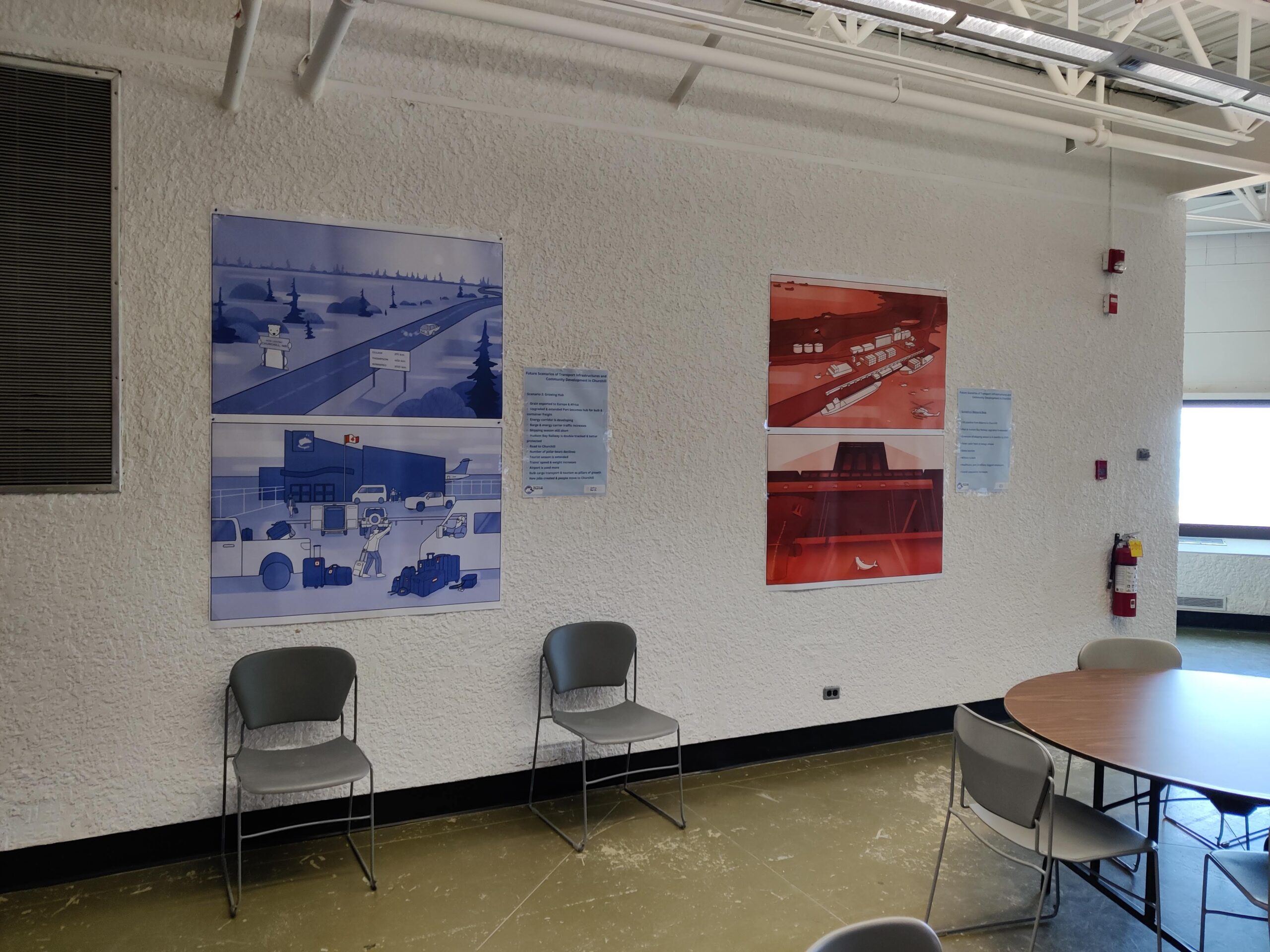
The Town of Churchill, a community of 870 people on the Hudson Bay in northern Manitoba, is unique in terms of transport infrastructure. It is inaccessible by road but it is home to the only deep-water port on the Arctic Ocean that is directly linked to the North American rail system. The community’s relatively large airport, which was constructed due to the former military presence, has become a key component of the growing tourism industry in the “Polar Bear Capital of the World”. The town’s history is closely intertwined with these infrastructures, and they have played a significant role in its growth and development. But what does the future hold for Churchill? What are the implications of the transfer of ownership and operation of the Hudson Bay Railway and the Port of Churchill to a consortium of local communities for the town and the region? How might climate change and environmental crises impact the community, its economy and infrastructure? What could a sustainable Churchill look like? To address such questions and related future scenarios, the European Research Council (ERC) project InfraNorth, with the support of the Town of Churchill, organized two future scenario workshops in August 2023. These events brought together locals as well as transport professionals to discuss, evaluate, and outline a variety of infrastructure scenarios. In this presentation, we will discuss aspects of the planning and organization of the workshops, as well as selected results.
Poster visualizations for future scenario workshop in Churchill, MB, Canada (Illustrations by Nickia McIvor). (Photo by Philipp Budka)
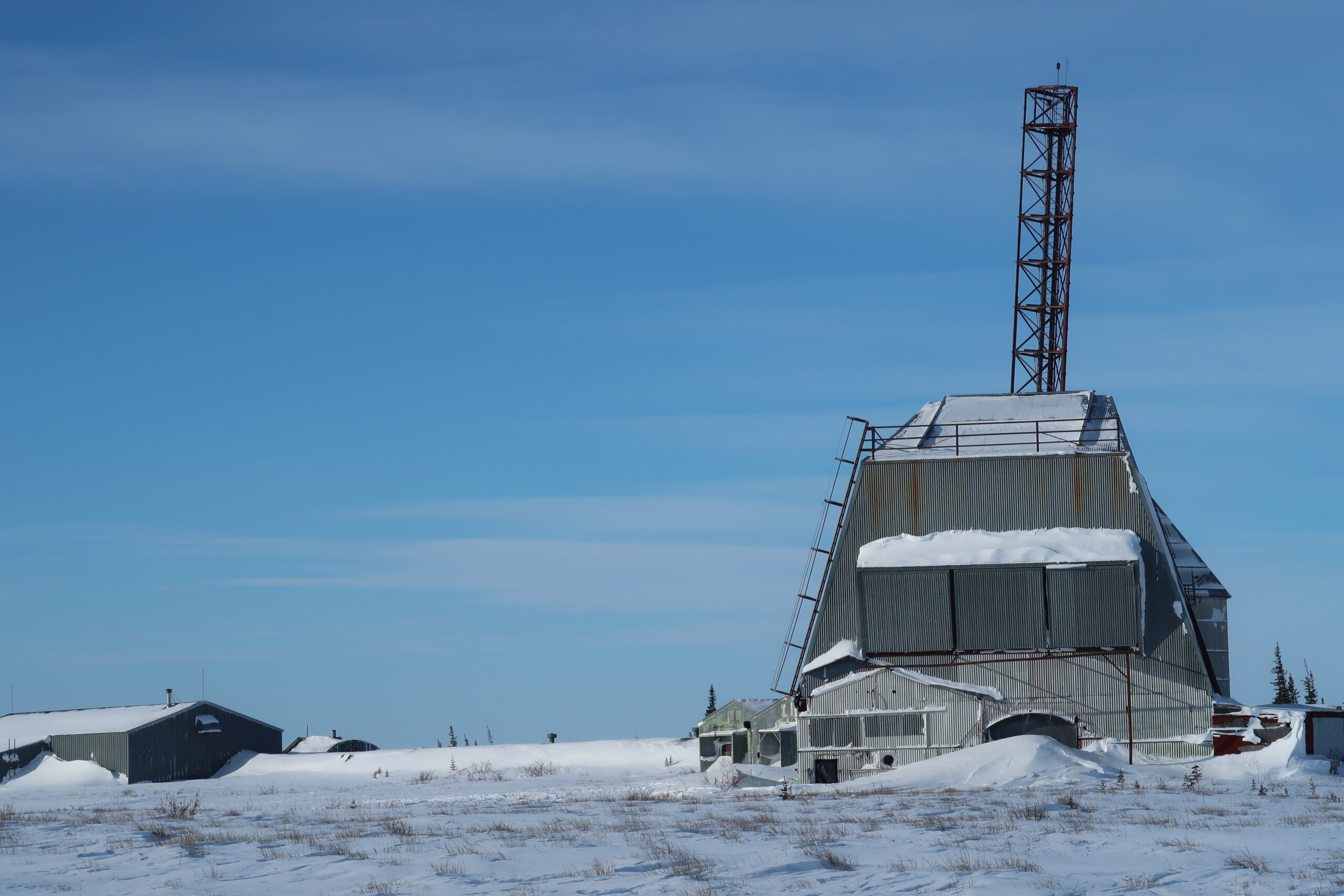
This paper explores transport infrastructures, their temporalities and entanglements in the Subarctic town of Churchill, Canada. The community of 870 people in Northern Manitoba, which is not accessible via roads, is unique in terms of transport infrastructures. It is home to the only deep-water port on the Arctic Ocean that is directly linked to the North American railway system. Due to the former military presence the community has a big airport which is crucial for the growing tourism industry in the “Polar Bear Capital of the World”. The military also constructed a rocket range which was later used by research organizations and a commercial operator before it was finally closed in the 1990s. While the ruins of the Churchill Rocket Range have become a tourist attraction, the Hudson Bay Railway, the Port of Churchill and the town’s airport are still in use and need to be maintained under harsh Subarctic conditions. Since 2021, the railway and port are – for the first time in history – owned by a consortium of local communities. For renovating and reviving these transport infrastructures, the new owners started right away to look for much needed investments. Eventually, recent global crises prompted the governments of Manitoba and Canada to once again invest heavily in these infrastructures. By discussing results from ethnographic fieldwork, archival research and a future scenario workshop, conducted within the ERC project InfraNorth, this paper focuses on infrastructural temporalities (Velkova & Plantin, 2023) through concrete moments of change.
Abandoned rocket range south of Churchill, MB, Canada. (Photo by Philipp Budka)
Budka, P. (2024). Infrastructural futures in Northern Manitoba, Canada. Paper at Arctic Congress, Bodø, Norway: Nordland Research Institute and Nord University, 29 May – 3 June.
Introduction
Infrastructures play a pivotal role in numerous social transformations, sociopolitical developments, and creative processes of innovation. Consequently, infrastructures have become a significant focus of research in anthropology and the humanities and social sciences more broadly (Buier, 2023; Harvey & Knox, 2015; Star, 1999). Questions that connect infrastructures to development, sustainability, and transformation point to the significance of temporality – not only the present and the past, but also the future – as a crucial analytical lens (Amatulli & Budka, forthcoming; Carse & Kneas, 2019). This paper examines the role of transport infrastructures in Northern Manitoba, Canada, by discussing questions related to infrastructural futures and futurities.
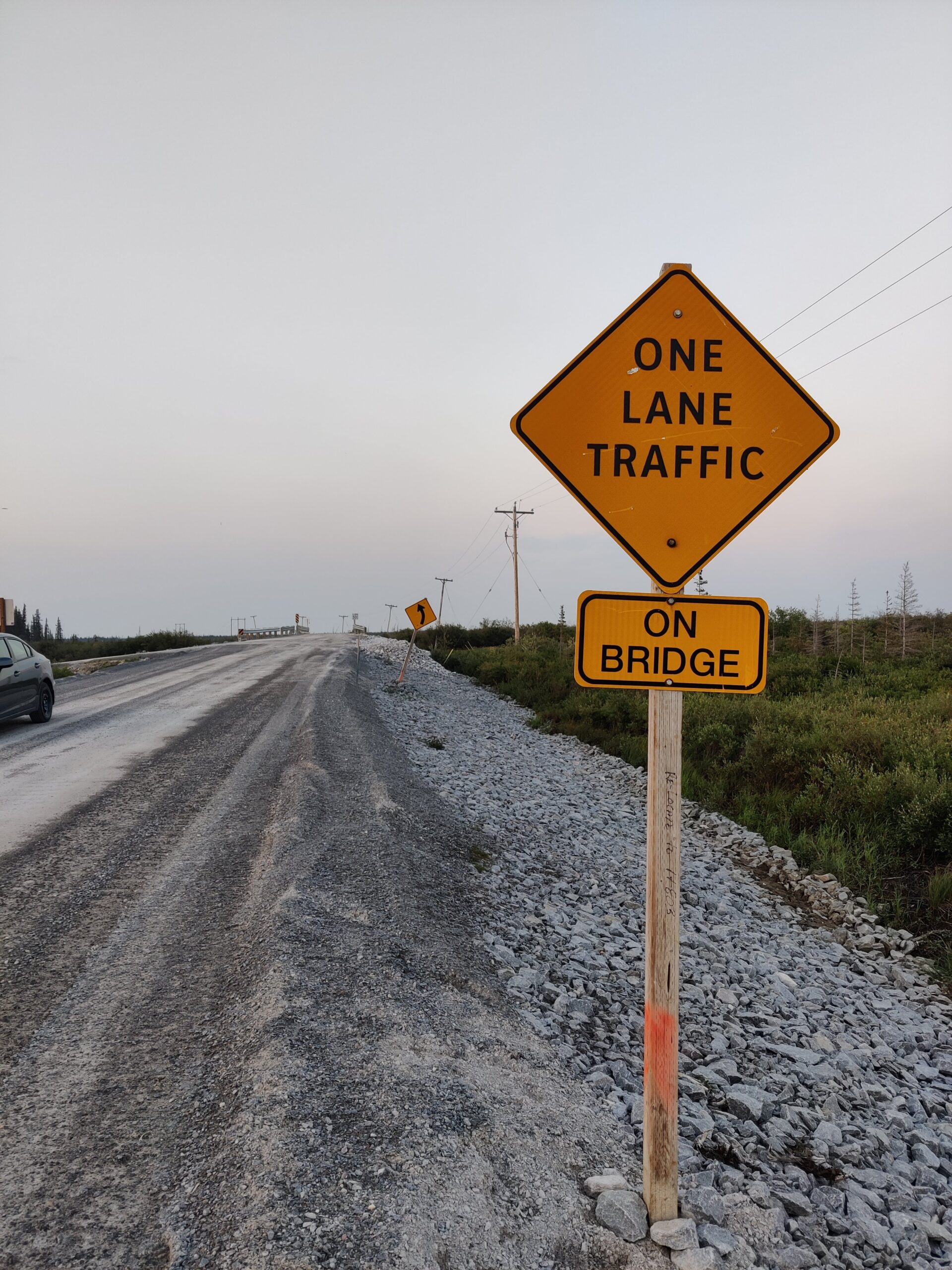
Traffic sign outside of Churchill, MB, Canada. (Photo by Philipp Budka)
Since the COVID-19 pandemic has revitalised and boosted interest in digital ethnography, the question arises as to what remains in its aftermath. Has digital ethnography entered the mainstream, and the digital merged with ethnographic research in an obviously profoundly digitised and digitalised world? Or has it disappeared back into the fringes, unphased by the short-lived interest? What do we actually mean when we talk about digital ethnography: online, remote, post-digital and should we discard these terms altogether? What methodological and ethical insights, movements, setbacks, reflections, innovations and (inter)disciplinary cross-references have emerged in the wake of global developments that have forced ethnographers to rethink their research in unprecedented ways? In this panel organised by the Digital Ethnography Initiative (DEI), we explore the state of digital ethnography (defined as ethnographic research with and through the “digital” and not limited to remote/online) as it emerges from turbulent but perhaps also fruitful times. We invite a wide range of contributions discussing methodological issues, conundrums, dilemmas, twists and turns of contemporary digital ethnography, based on original research. The contributors will be invited to subsequently write a short blog entry for the DEI blog, based on the papers presented at the panel.
Infrastructures have become prominent research fields in anthropology and in the humanities and social sciences more generally (e.g., Buier, 2023; Harvey & Knox 2015; Star 1999). Questions that link infrastructures to development, sustainability, and transformation point to the importance of temporalities – not only the (ethnographic) present, but also the (historical) past and the (sociotechnical) future – as a key analytical lens. Infrastructures are planned, approved, built, operationalized, or renovated with the anticipation that they will, for example, create economic growth and improve the socioeconomic well-being of local populations. Consequently, one way to explore infrastructure development is to look at the broad range of desires, hopes, and fears toward the future of these “sociotechnical spaces” (Mason, 2004). Such sentiments or feelings are particularly strong towards infrastructural “mega-projects” which are very cost intensive, involve a variety of stakeholders, and affect millions of people (Flyvbjerg, 2017). Among such projects are motorways, airports, seaports, spaceports, rail lines, submarine cable systems, dams, wind farms, offshore oil and gas facilities. This workshop invites contributors to discuss the relationships between specifically large-scale infrastructures and futurities – affective and ideologically loaded desires or fears of being in the future – by reflecting on the following two questions: (1) What role do futurities play in the imagining, conceiving, and making of infrastructures and their futures? (2) How do infrastructural futurities shape the relationship between infrastructure development and sociocultural lifeworlds? The workshop will be structured by these two questions and participants will be asked to discuss them in at least two “tour the table” rounds, which are then followed by open discussions.
Budka, P., Davis-Sulikowski, U., Krainer, A., & Seiser, G. (2024). Elke Mader obituary (1954-2021). Zeitschrift für Ethnologie/Journal of Social and Cultural Anthropology, 148, 2 (2023), 327-32. https://doi.org/10.60827/zfe/jsca.v148i2.1318
Together with Ulrike Davis-Sulikowski, Anita Krainer and Gertraud Seiser, I have written an obituary of my long-time mentor and teacher Elke Mader for the journal Zeitschrift für Ethnologie/Journal of Social and Cultural Anthropology. The text is openly accessible.
After Elke Mader was appointed to the Chair of Social and Cultural Anthropology at the University of Vienna in 2006, she declared that she had not ultimately expected to obtain a permanent position in academia. Two decades of precarious work and temporary jobs left her unsure about her future as an anthropologist. Thirteen years later and six months before her planned retirement, Elke was diagnosed with cancer. After two years fighting the illness, she passed away on 8 August 2021 at the age of 67. This obituary touches on a selection of Elke’s research, teaching and academic achievements. It does not pretend to be exhaustive in any way but rather aims to showcase aspects and pieces of Elke’s academic interests that the authors shared with her at particular moments in time.
Budka, P. (2023). Community transport infrastructures in Northern Manitoba, Canada. Paper at STS Austria Conference 2023, Vienna, Austria: Austrian Academy of Sciences, 27-29 November.
Abstract
Infrastructures are at the core of many social transformations, sociopolitical developments, and creative processes of innovation. They have become key indicators and signs of economic development, technological advancement, and modernization. Particularly in small and remote communities, infrastructures are often associated with economic growth, socio-economic well-being, and therefore communal sustainability. This paper looks into the role and meaning of transport infrastructures in sustaining remote communities in Northern Manitoba, Canada. In doing so it focuses in particular on questions of infrastructural ownership and control. As of 2021, and for the first time in history, key transport infrastructures – the Hudson Bay Railway and the Port of Churchill – are owned by a consortium of 41 northern communities. The paper draws on ethnographic data that have been collected in the region for the ERC project InfraNorth. As the case of transport infrastructures in Northern Manitoba shows, social relationships and organizational partnerships are key for planning, developing, building, continuing, and maintaining infrastructures. Infrastructure should therefore be conceptualized as more than just an operational system of technological objects.
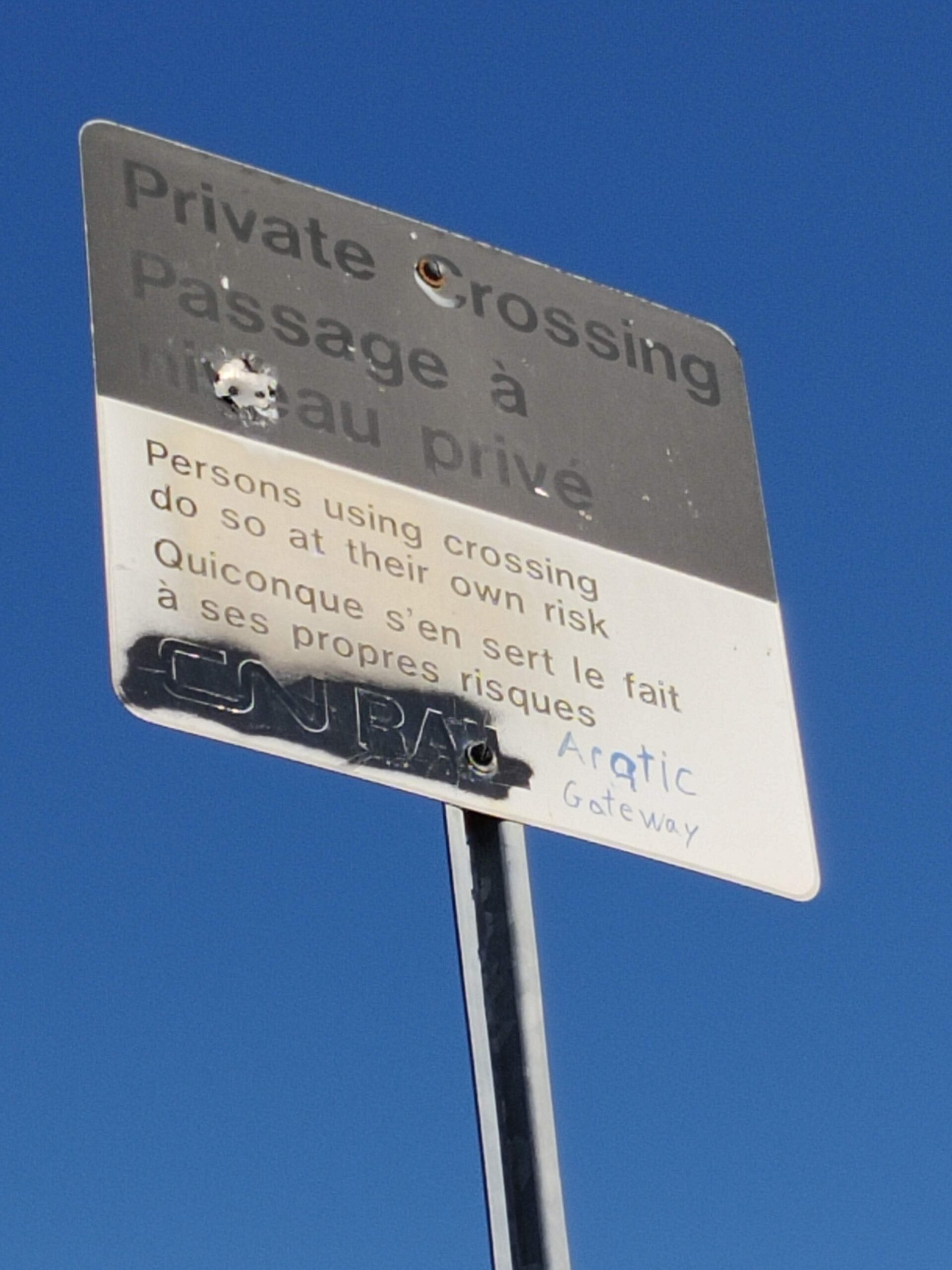
Crossing sign outside of Churchill, MB, Canada. (Photo by Philipp Budka)
This paper explores transport infrastructures in the Subarctic town of Churchill, Canada. The community of 870 people in Northern Manitoba, which is not accessible via roads, is unique in terms of transport infrastructures. It is home to the only deep-water port on the Arctic Ocean that is directly linked to the North American railway system. And due to the former presence of US and Canadian military the community has a big airport, which has become key for the growing tourism industry in the “Polar Bear Capital of the World”. Churchill only exists because of these infrastructures and it has been changing together with them. This entanglement becomes particularly visible and tangible when infrastructure gets disrupted, when infrastructure fails. As in 2017, when a flooding destroyed the tracks of the Hudson Bay Railway and Churchill was without land connection for 18 months because nobody wanted to pay for repair. Five years later, however, and in the light of recent geopolitical developments, the federal and the provincial governments agreed to invest up to CA$ 147 million in the Hudson Bay Railway and the port. By discussing ethnographic findings, gathered within the ERC project InfraNorth, this paper focuses on the role of transport infrastructures in sustaining and transforming the community of Churchill.
Out of stock items at the Northern Store in Churchill, MB, Canada. (Photo by Philipp Budka)
This paper explores how tourism and transport infrastructures are entangled in the town of Churchill in Northern Manitoba, Canada. Situated at the junction of the boreal forest, the Arctic tundra, and the Hudson Bay, the community of 870 people has become known as the “Polar Bear Capital of the World”. While early bear watching projects in Churchill already started in the 1970s, tourism really exploded when polar bears became worldwide symbols of global warming and climate change at the end of the 20th century.
This tremendous growth in tourism was mainly enabled by the transport infrastructure of a town which has no road connection. The Hudson Bay Railway, which was originally built to ship grain from Canada’s prairie provinces to the seaport of Churchill, now also brings tourists and their supplies. The same goes for Churchill’s airport, which was constructed for military purposes during the Second World War and now serves as transportation hub for tourists, tour operators, and their cargo.
By discussing ethnographic findings, this paper focuses on the role of tourism, as a key economic driver, and its connection to transport infrastructures in sustaining and transforming the town of Churchill. In doing so, it also critically reflects upon the very notion of sustainability (transformation). This study is one of several case studies in the ERC project InfraNorth, which looks into the affordances of transport infrastructures on a pan-Arctic scale.
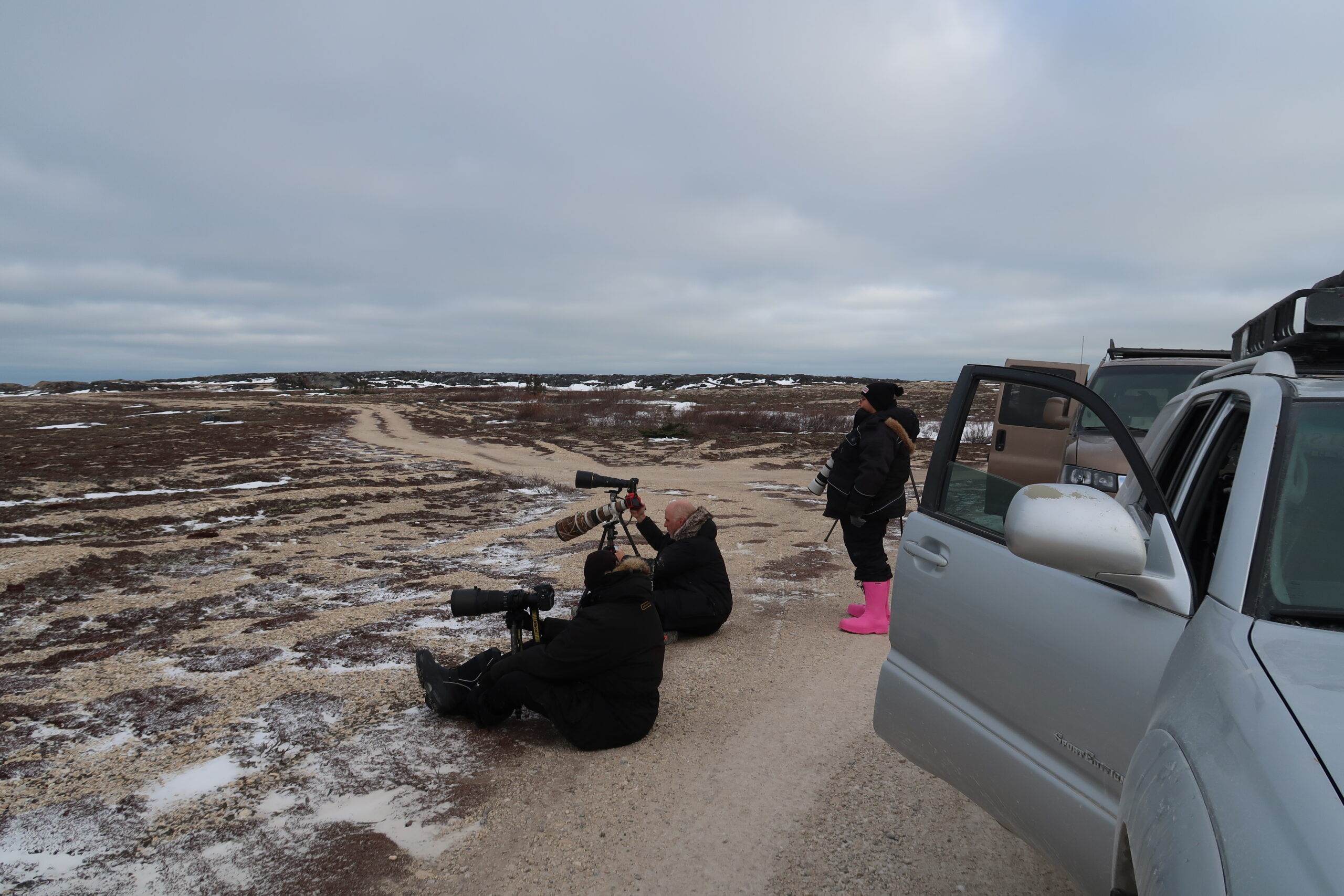
Professional photographers during bear season in Churchill, MB, Canada. (Photo by Philipp Budka)