Budka, P. (2026). [Review of the book Sustainable energy transitions in Canada, by M. S. Winfield, S. D. Hill & J. R. Gaede]. Zeitschrift für Kanada-Studien, 46(76), 198-199.
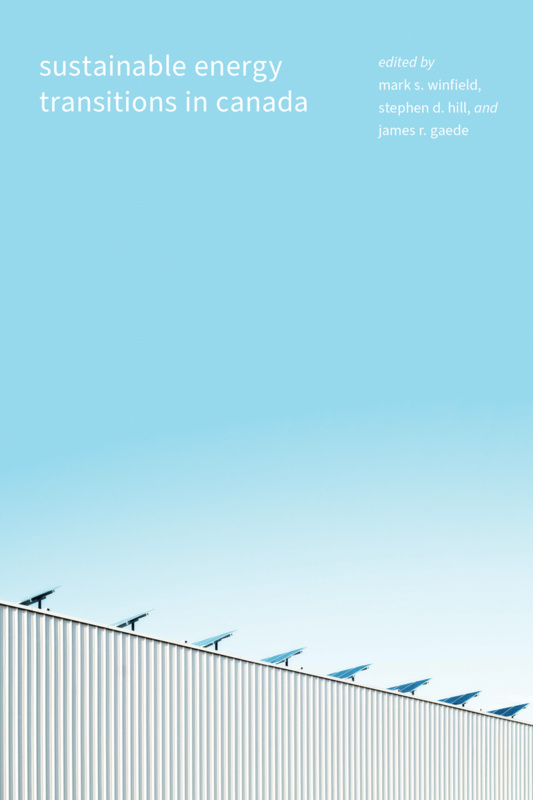
The edited volume Sustainable Energy Transitions in Canada addresses one of the most urgent and complex challenges of the twenty-first century: steering a federal, resource-dependent country toward decarbonized and equitable energy systems. Editors Mark S. Winfield, Stephen D. Hill, and James R. Gaede bring together fourteen contributions from leading Canadian scholars to explain both the inertia and the potential of energy transitions across Canada’s political, economic, and ecological landscapes. In their Introduction, the editors situate Canada’s energy transition within the broader context of climate change, federalism, and environmental justice, outlining the book’s dual focus on conceptual framing and empirical diversity.
The first section develops conceptual and cross-cutting perspectives. James Meadowcroft and Daniel Rosenbloom open by revisiting socio-technical transition theory and the lessons of historical energy shifts. Madeleine McPherson emphasizes the analytical and practical value of energy-systems integration (ESI) in planning for decarbonization. Kirby Calvert focuses on community energy planning as a participatory framework linking local governance with national transition objectives.
Theresa McClenaghan and colleagues provide a forceful reminder that climate policy can deepen inequities if energy poverty is not addressed through sustained advocacy. Heather Castleden’s chapter on decolonizing sustainable energy policy stands out for insisting that meaningful transitions must rest on Indigenous sovereignty and self-determination. Douglas C. Macdonald and Mark S. Winfield close the section with an incisive discussion of the “stacked” contradictions that characterize Canadian energy and climate policy—governments expanding fossil-fuel infrastructure while promoting carbon pricing and renewable development.
The second section presents regional and sectoral case studies. Alexandra Mallett and colleagues examine energy transitions in the territorial North, highlighting Indigenous agency but also the infrastructural and financial constraints that keep many Arctic communities reliant on diesel. While their chapter acknowledges opportunities for transformative change, coverage of the Yukon, NWT, and Nunavut remains comparatively brief, leaving northern experiences underrepresented beside the more detailed provincial analyses that follow.
Brendan Haley and colleagues trace tensions between megaproject development and community power in Atlantic Canada. Pierre-Olivier Pineau and Johanne Whitmore assess Quebec’s low-carbon electricity advantage and the policy choices needed to extend it beyond the power sector. Stephen D. Hill, Mark S. Winfield, and James R. Gaede examine Ontario’s volatile energy landscape, where early renewable gains gave way to policy reversal, while Benjamin J. Thibault, Tim Weis, and Andrew Leach show how Alberta’s slower but steadier path reflects its distinct market and political context.
Aaron Pardy, Thomas Budd, and Mark Jaccard analyze British Columbia’s evolving subnational climate leadership, after which the volume turns from regional to sectoral perspectives. Richard Carlson details the formidable challenge of decarbonizing residential heating, given the persistence of fossil-gas networks and cold-climate demands, while Colleen Kaiser and Mark Purdon address transportation, where overlapping jurisdictions and car-oriented urban design impede emission reductions.
From a sociocultural perspective, one of the volume’s notable achievements lies in its recognition of the social and ethical dimensions of energy transitions. The chapters on energy justice, decolonization, and community participation illuminate how questions of power, place, and belonging shape the transition landscape. Yet, from an anthropological viewpoint, the book’s policy-oriented framing sometimes sidelines the experiential and narrative dimensions through which communities make sense of energy change. The collection’s strength in institutional and systemic analysis thus invites complementary ethnographic and cultural research into how transitions are lived, imagined, and contested in everyday life.
The book’s strengths lie in its conceptual clarity, interdisciplinary scope, and accessible style. It bridges technical modelling, political analysis, and normative reflection, making it valuable both for academic teaching and for practitioners seeking to understand Canada’s policy landscape. Minor limitations include uneven regional coverage—especially the relatively cursory treatment of northern territories and the absence of Manitoba and Saskatchewan—and a somewhat brief engagement with emerging but controversial technological fixes such as carbon capture and small modular reactors. Still, these gaps do not detract from the coherence of the whole. The volume’s consistent attention to justice, governance, and decolonization distinguishes it within Canadian environmental scholarship.
In their Conclusion, the editors synthesize the volume’s findings and argue for greater coherence between federal and provincial actions through energy-systems integration and community energy planning. Sustainable Energy Transitions in Canada thus offers a comprehensive and critical synthesis of where Canada stands and how it might move forward. It captures the paradox of a country rhetorically committed to climate leadership yet constrained by institutional inertia and regional asymmetry. For scholars approaching Canada’s energy transitions from sociocultural, political, and environmental perspectives alike, this collection provides both diagnosis and direction—a balanced, lucid, and much-needed resource for understanding the obstacles and possibilities of a just energy transition in Canada.