Skip to content

Special Issue: Ethnographies of infrastructure

Special Issue: Ethnographies of infrastructure published on No Comments on Special Issue: Ethnographies of infrastructure

Budka, P., Schweitzer, P., & Povoroznyuk, O. (Eds.). (2026). Ethnographies of infrastructure [Special issue]. Journal of Contemporary Ethnography, 55(1).

Cover of JCE, 55(1), 2026.
Cover of JCE, 55(1).

Summary

Philipp Budka, Peter Schweitzer, and Olga Povoroznyuk have published a special issue titled “Ethnographies of Infrastructure” in the Journal of Contemporary Ethnography (Vol. 55, No. 1). The issue showcases research on infrastructure as a social, political, and everyday phenomenon.

In the opening article, Schweitzer, Povoroznyuk, and Budka introduce an ethnographic framework that highlights how infrastructures are embedded in daily life, shaped by power relations, and oriented toward imagined futures. Together with Alexandra Meyer, Katrin Schmid, and Nikita Strelkovskii, they also co-authored an article examining how infrastructural futures are actively produced and negotiated in the present, with a strong focus on Arctic contexts.

Further contributions extend this engagement with infrastructure across different regions. Alexandra Meyer, with Ria-Maria Adams and Sophie Elixhauser, examines Arctic airports as critical yet ambivalent infrastructures of connection. Olga Povoroznyuk contributes a comparative analysis of expanding seaport projects in Alaska, Norway, and Russia, while Katrin Schmid analyzes how global e-commerce platforms are transforming food supply and everyday life in Nunavut, Canada. Broadening the geographical scope, Andrea Freddi, Lucaz González, and Felipe Cecchi explore conflicts over road construction and environmental conservation in the Chilean North Patagonian frontier, treating the environment itself as a form of infrastructure.

The full special issue is available at https://journals.sagepub.com/toc/jcec/55/1
Article: Infrastructural disruption, entanglement & change in Northern Manitoba, Canada

Article: Infrastructural disruption, entanglement & change in Northern Manitoba, Canada published on No Comments on Article: Infrastructural disruption, entanglement & change in Northern Manitoba, Canada

Budka, P. (2025). Infrastructural disruption, entanglement and change in Northern Manitoba, Canada. Anthropologica, 67(1). https://doi.org/10.18357/anthropologica67120252709

My openly accessible article is published in the Special Issue “Narratives and Temporalities of Infrastructure: The Canadian Experience,” which I co-edited with Giuseppe Amatulli for Anthropologica. The article explores how infrastructural disruptions and entanglements reshape social relations and everyday life in Northern Manitoba.

Abstract

Situated at the junction of boreal forest, Subarctic tundra, and Hudson Bay, the town of Churchill in northern Manitoba is unique for its transport infrastructure. With no road access, this community of 870 people hosts the only deep-water port on the Arctic Ocean connected to the North American rail network. Its airport, a legacy of military presence, supports a growing tourism economy. Churchill exists because of these infrastructures—and has changed alongside them. This entanglement becomes especially visible when infrastructure is disrupted. In 2017, flooding destroyed sections of the Hudson Bay Railway, cutting off land access for eighteen months. The disruption triggered shifts in ownership, control, and governance, resulting in one of the few cases worldwide where Indigenous and northern communities collectively own and manage a major Subarctic transport corridor. Ethnographic fieldwork and future scenario workshops reveal how residents of Churchill engage with infrastructure—living with, adapting to, and reimagining it in everyday life. Infrastructure is approached not only as a technical system but as a site of political, affective, and future-oriented engagement. As such, it offers a powerful lens for understanding broader dynamics of change and continuity in (sub)Arctic regions shaped by climate pressures and colonial legacies.

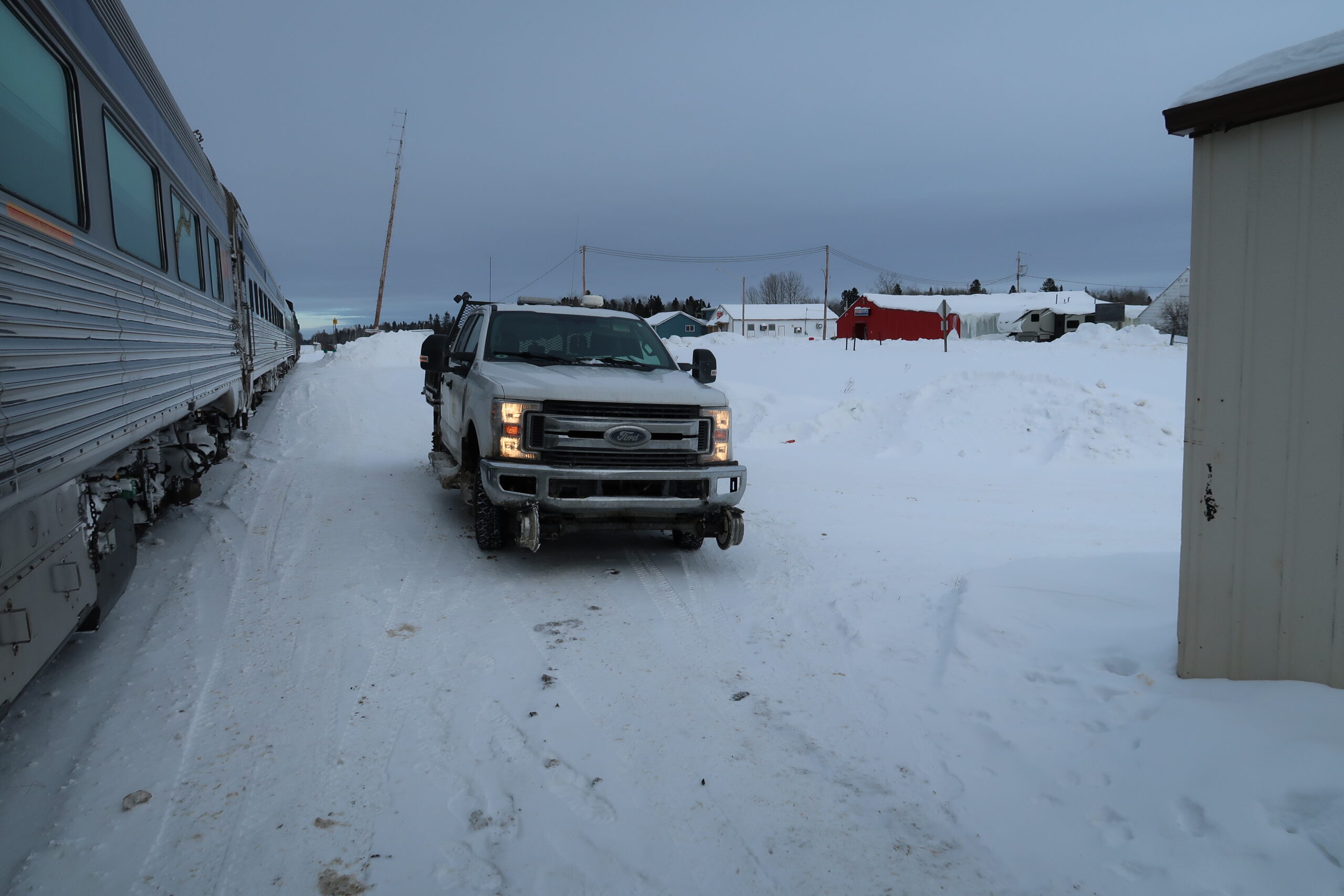
 Road-rail pickup truck in Wabowden, MB, Canada. (Photo by Philipp Budka)
Road-rail pickup truck in Wabowden, MB, Canada. (Photo by Philipp Budka)

Article: Introduction – Narratives & temporalities of infrastructure in Canada

Article: Introduction – Narratives & temporalities of infrastructure in Canada published on No Comments on Article: Introduction – Narratives & temporalities of infrastructure in Canada

Budka, P., & Amatulli, G. (2025). Introduction: Narratives and temporalities of infrastructure in Canada. Anthropologica, 67(1). https://doi.org/10.18357/anthropologica67120252794

The openly accessible introduction to the Special Issue “Narratives and Temporalities of Infrastructure: The Canadian Experience,” which I co-authored with Giuseppe Amatulli for Anthropologica, outlines the conceptual framework and scope of the collection. We reflect on how infrastructures are narrated and temporalized, and how these perspectives contribute to anthropological research in the Canadian context.

Anthropological Approaches to Infrastructure

Infrastructures lie at the core of numerous social transformations, sociopolitical and economic developments, and creative processes of innovation. They have become significant indicators of an ongoing transition towards preferable futures, symbols of economic growth, technological advancement, and modernization. As Harvey and Knox (2012, 523) argue, infrastructures embody “promises of emancipatory modernity”—such as speed, connectivity, and economic prosperity; they “enchant” the hopes and dreams associated with development. Infrastructures contribute to imaginaries of improved futures, which remain elusive, flawed, and difficult to define (Abram and Weszkalnys 2013). Operating “on the level of fantasy and desire” (Larkin 2013, 333), infrastructures “draw together political and economic forces in complicated ways and often with unexpected effects,” implicating “broader dynamics of social change” (Harvey, Jensen, and Morita 2017, 2).

Continue reading

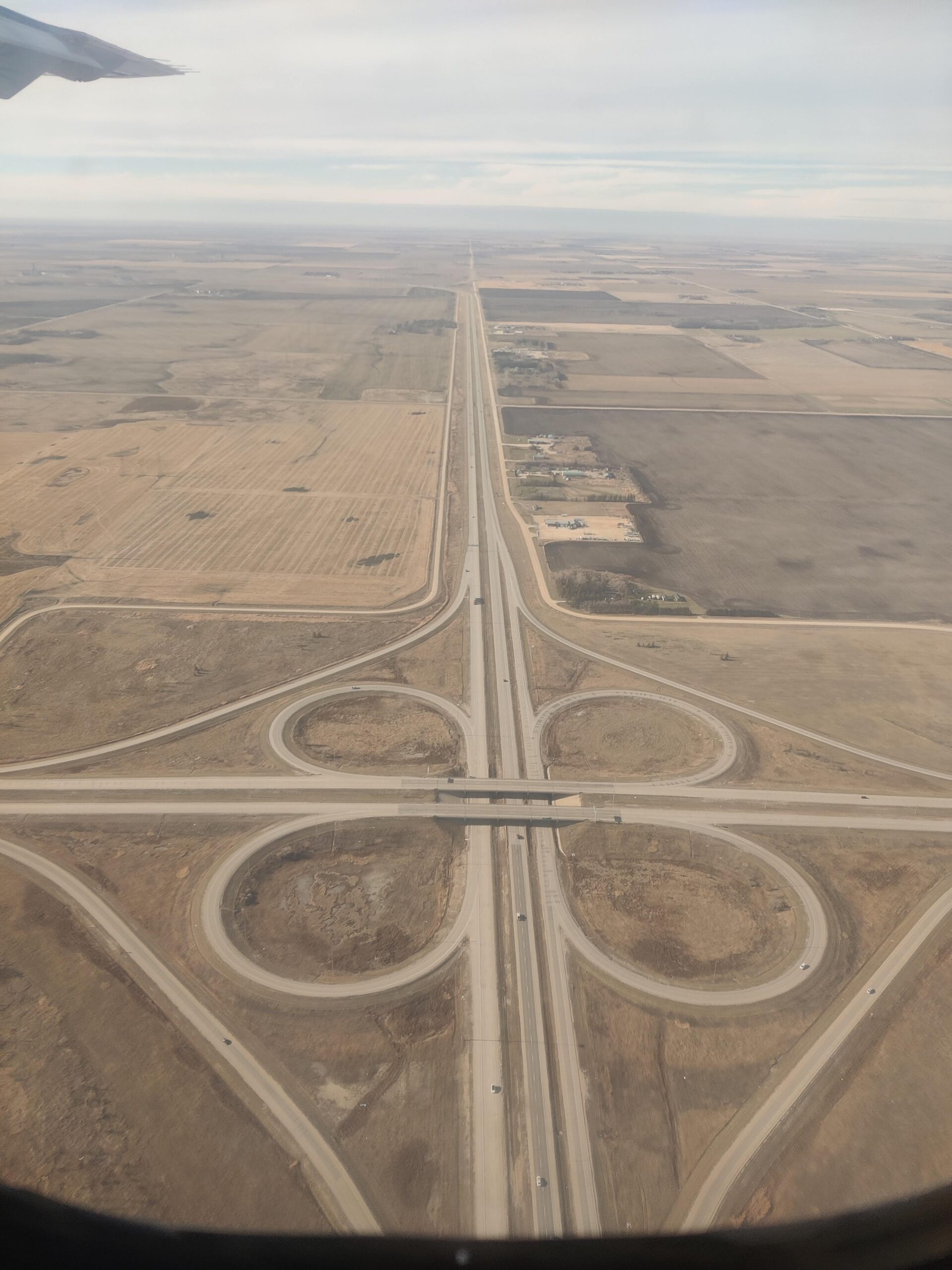
Road network, MB, Canada. (Photo by Philipp Budka)

Special Issue: Narrative & temporalities of infrastructure

Special Issue: Narrative & temporalities of infrastructure published on No Comments on Special Issue: Narrative & temporalities of infrastructure

Amatulli, G., & Budka, P. (Eds.). (2025). Narratives and temporalities of infrastructure: The Canadian experience [Special issue]. Anthropologica, 67(1).

Cover Anthropologica 67(1), 2025.
Cover of Anthropologica, 67(1). (Photo by Philipp Budka)

Summary

The special issue of Anthropologica, “Narratives and Temporalities of Infrastructure: The Canadian Experience,” examines infrastructure as a social, political, and temporal formation. Edited by Giuseppe Amatulli and Philipp Budka, the collection brings together ethnographic analyses of how infrastructures mediate governance, environmental change, and everyday life across northern and rural Canada.

Contributors explore infrastructure as a site of contestation, relationality, and future making. Carly Dokis, Randy Restoule, and Benjamin Kelly examine First Nations water systems and the political ontologies that shape risk and responsibility. Susanna Gartler and Susan A. Crate analyze Inuvialuit and Gwich’in understandings of thawing permafrost as a transforming infrastructural relation under climate change. Giuseppe Amatulli investigates development planning and extractive futures in British Columbia resource towns, while Anna Bettini considers renewable energy narratives in rural Alberta. Kaylia Little addresses experiences of energy reliability in Iqaluit, and Katrin Schmid examines runway expansion and projected futures in Nunavut. Philipp Budka traces infrastructural disruption and entanglement in northern Manitoba. The issue concludes with a commentary by Anna Soer on infrastructures of the future and their implications for governance.

The collection highlights infrastructure as a key analytic for understanding sovereignty, temporality, and the uneven production of futures in Canada. 

The full open-access issue is available at https://cas-sca.journals.uvic.ca/index.php/anthropologica/issue/view/143

Primary Sidebar